
When AI Stole a Celebrity's Identity
The Tom Hanks Deepfake Advertisement Incident
Keywords: Tom Hanks AI scam, deepfake advertisement, AI-generated ads, celebrity deepfake, artificial intelligence misuse, generative AI, cybersecurity, digital identity, AI misinformation
Introduction
As generative AI becomes more powerful, creating realistic images and videos of real people has never been easier. While these tools offer exciting possibilities, they also raise serious concerns about privacy, consent, and digital identity.
In 2023, Hollywood actor Tom Hanks became the center of one such controversy when an AI-generated advertisement appeared online using his likeness without permission. The incident quickly gained attention and highlighted how easily artificial intelligence can be used to impersonate public figures.
This case serves as an important reminder that seeing a familiar face online no longer guarantees authenticity.
What Happened?
In October 2023, Tom Hanks publicly warned his followers about an advertisement circulating online that appeared to feature him promoting a dental insurance plan.
The advertisement showed what looked like Tom Hanks endorsing the product. However, the actor had never participated in the campaign and had not given permission for his image to be used.
To alert the public, Hanks posted a message on social media stating:
"There’s a video out there promoting some dental plan with an AI version of me. I have nothing to do with it."
The statement quickly spread across news outlets and social media platforms, drawing attention to the growing problem of AI-generated impersonation.
When Did It Happen?
The incident became public in October 2023 when Tom Hanks issued a warning through his official social media accounts.
At the time, generative AI tools capable of creating highly realistic synthetic images and videos were becoming increasingly accessible to the public.
Who Were the Victims?
Tom Hanks
The primary victim was Tom Hanks himself. His likeness and reputation were used without consent to promote a commercial product.
Consumers
People who viewed the advertisement could have been misled into believing the actor genuinely endorsed the service.
Public Trust
The incident contributed to broader concerns about trust in digital content. If celebrities can be convincingly impersonated, ordinary users may struggle to determine what is real and what is fabricated.
Which AI Technology Was Used?
The exact software used to create the advertisement was never publicly confirmed.
However, experts believe it likely involved modern generative AI technologies such as:
- AI image generation models
- Deepfake face-generation tools
- Synthetic media editing software
These systems can create highly realistic representations of individuals using publicly available photos and videos.
The rapid improvement of such technologies has made creating convincing fake endorsements easier than ever before.
Why Did People Believe It?
Several factors made the advertisement convincing.
Familiar Face
Tom Hanks is one of the most recognizable actors in the world. Viewers naturally associate his image with credibility and trust.
High-Quality AI Content
Modern generative AI tools can produce realistic facial features, expressions, and visual details that closely resemble real photographs and videos.
Social Media Distribution
Content spreads quickly online, and many users do not verify information before sharing it with others.
Evidence and Proof
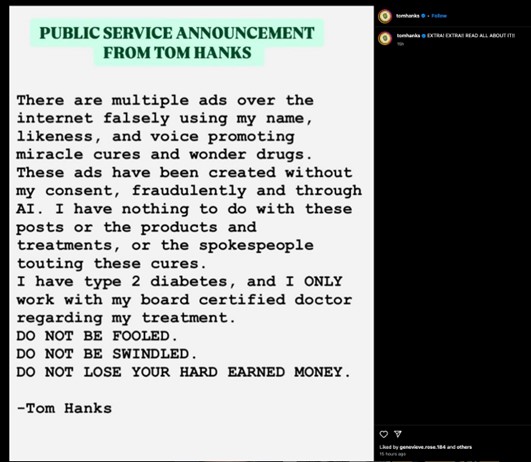
"Tom Hanks warned followers in October 2023 about an AI-generated advertisement that falsely appeared to feature his endorsement."
Why This Incident Matters
The Tom Hanks deepfake advertisement was more than just a celebrity impersonation case.
It demonstrated that:
- AI can replicate a person's appearance without consent.
- Fake endorsements can influence consumer decisions.
- Public figures are increasingly vulnerable to synthetic media abuse.
- Existing regulations may struggle to keep pace with AI technology.
As AI systems continue to improve, similar incidents could affect politicians, business leaders, journalists, and ordinary individuals.
Lessons Learned
Verify Endorsements
Before trusting celebrity endorsements, check official websites and verified social media accounts.
Be Skeptical of Online Advertisements
Even realistic-looking advertisements can be generated using AI.
Strengthen AI Regulations
Governments and technology companies need clearer policies regarding unauthorized use of a person's likeness.
Promote Digital Literacy
Understanding how AI-generated content is created can help users avoid deception.
Final Thoughts
The Tom Hanks AI advertisement incident highlighted one of the most important challenges of the generative AI era: protecting digital identity.
While artificial intelligence offers incredible opportunities for innovation, it also creates new risks when used without consent or accountability. The ability to recreate a person's face and image with minimal effort raises important questions about privacy, trust, and ownership in the digital world.
As AI technology continues to evolve, society must find ways to balance innovation with ethical responsibility. Otherwise, incidents like this may become increasingly common.
References
- Tom Hanks Official Instagram Warning (October 2023)
- Reuters Coverage
- BBC News Reporting
- Associated Press Coverage
- AI and Synthetic Media Research Publications